
NiMotion on the 2026 Motion Control Market Rebound: APAC Leads the Recovery, Integration and Intelligence Define the Next Chapter
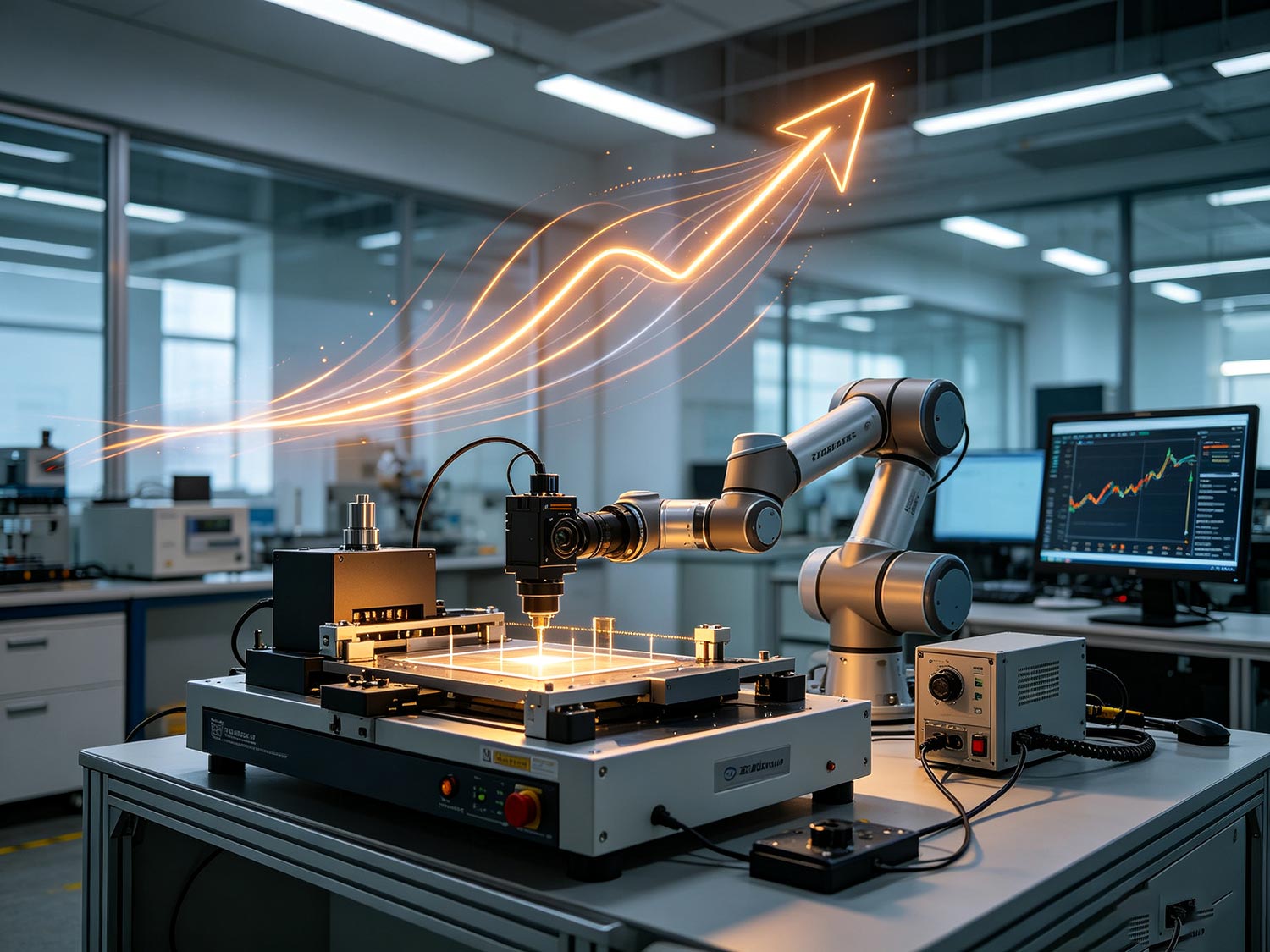
The global motion control market is finally turning a corner. After two consecutive years of contraction — with the market shrinking by 6.5% in 2024 and a further 2.0% in 2025 — 2026 is projected to be the first year of positive growth since 2023. According to Interact Analysis, the global motion controls market is expected to grow by 3.9% in 2026, with growth rates returning to pre-pandemic levels of 4.0% to 5.0% annually thereafter. Other industry sources place the market at USD 17.79 billion in 2025, projected to reach USD 18.89 billion in 2026 at a CAGR of 6.65%, and USD 27.93 billion by 2032. For B2B motion control system providers like NiMotion, the question is not whether the market will grow — but how to capture that growth in a landscape that is shifting rapidly in terms of geography, technology, and customer expectations.
1. Regional Dynamics: The Asia-Pacific Engine
The Asia-Pacific (APAC) region stands out as the primary engine of growth. In 2025, while the Americas declined by 1.0%, EMEA contracted by 7.5%, and Japan fell by 1.8%, APAC (excluding Japan) actually grew by 1.9%, driven by strong semiconductor and electronics performance in China, South Korea, and India. APAC's share of the global motion control market is expected to rise from 40% in 2024 to 43% by 2029. Within this region, India is emerging as a particularly dynamic market, with the India motion control market anticipated to grow at a remarkable 9.51% CAGR from 2026 to 2031. For NiMotion, these numbers tell a clear story: the center of gravity in industrial automation is shifting East, and success will depend on strong local presence, adaptable product lines, and a deep understanding of regional application needs.
2. Growth Drivers: Small-Axis Automation and Legacy Modernization
Industry analysts point to several converging trends: the increasing adoption of servo-driven automation systems, rising demand for high-precision motion control in packaging lines, growing integration of multi-axis motion control platforms, and expansion of motion control usage in robotics applications. Perhaps most tellingly, "the automation of smaller axes continues to be a consistent growth driver" across the motion control market, notes Interact Analysis. "Initially driven by precision sectors such as semiconductors and electronics, this trend has expanded to include legacy industries like packaging, printing, and textiles." As automation costs decline and software integration improves, small-axis retrofits have become an accessible entry point for factories modernizing older equipment — a segment where NiMotion's integrated product philosophy delivers immediate, tangible value.
3. The Integration Imperative: From Components to Systems
The dominant trend in motion control is no longer about individual components — it is about systems. The progressive integration of mechanical, motor, sensing, and control elements into pre-engineered subsystems is simplifying robotic workcell deployment and coordination. This is precisely the segment where NiMotion's product philosophy — from integrated closed-loop stepper motors to integrated servo motors and integrated motion controllers — delivers tangible value. By combining drive, control, and communication into compact, network-ready packages, NiMotion helps manufacturers reduce wiring complexity, save cabinet space, and accelerate machine commissioning.
4. Outlook: Who Will Capture the Growth?
The market rebound is real. But in a landscape where modularity, intelligence, and regional agility define competitive advantage, the real question is not whether the market will grow — but who will capture that growth. At NiMotion, we believe the answer lies in integration, innovation, and an unwavering commitment to making motion control simpler, smarter, and more accessible for every application, in every region where manufacturing is transforming for the next decade.