
China’s Servo Market in 2026: ¥273 Billion, 50% Localization, and a 60% Rare-Earth Cost Shock
Bottom line: In 2026, China's servo market is growing, the domestic share is growing, and raw material costs are growing. Only the third variable determines who survives — the winners will be those who can drive down total system cost under that pressure.
Motion control is often called the "heart" of industrial automation, and the servo system is the core of that heart. As 2026 unfolds, three variables are pulling this market in different directions at once.
Variable 1: The Market Is Growing — But the Source of Growth Has Changed
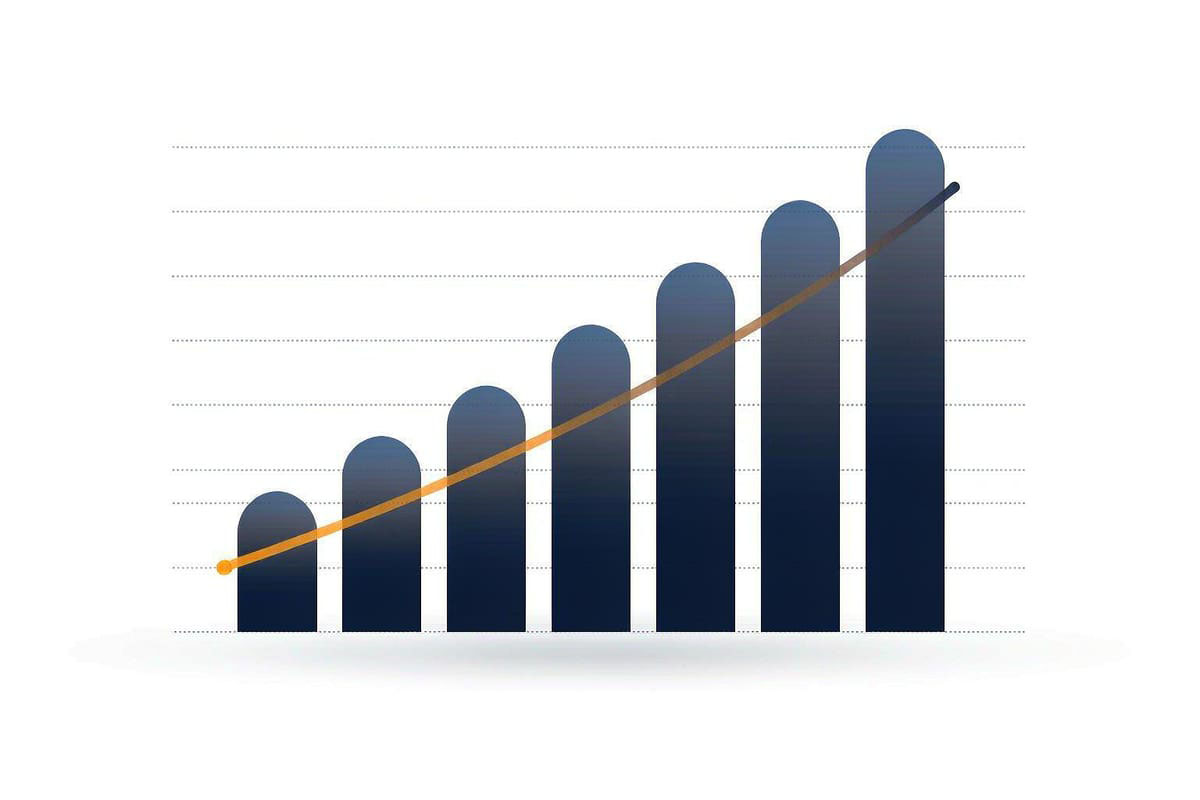
According to China Research & Intelligence (中研普华), China's servo system market grew from ¥10.2 billion in 2017 to ¥23.4 billion in 2024, with 2025 estimated at roughly ¥24.8 billion and 2026 projected at about ¥27.3 billion (2026-08).
A second source, IIM, uses a different basis: the global servo market reached about US$48.5 billion in 2025, with China at approximately US$16.8 billion — 34.6% of the global total and growing 9.8%, faster than the world average. IIM expects the global market to pass US$52 billion in 2026, with China approaching US$19 billion.
The two datasets use different bases (RMB vs. USD, total vs. segment), but the trend is the same: China remains the world's largest single servo market and keeps outgrowing the global average.
More important is the shifting demand mix:
Downstream sector | 2025 demand share | Characteristic |
|---|---|---|
Industrial robots | ~28% | Cobots demand smaller size and better torque control |
Machine tools | ~22% | Five-axis machining requires higher rigidity and response |
New energy (PV / lithium) | Growth >15% | Winding machines and module equipment drive incremental demand |
Logistics robots (AGV/AMR) | Growth ~22.7% | Volume expected to exceed 6.2 million units in 2026 |
Source: IIM, 2026.
In one sentence: traditional applications are "steady but slow," while emerging applications are "fast but demanding." Logistics robots, collaborative robots and humanoids — the fastest-growing segments — are precisely the ones most demanding about size, power consumption and integration. That is the natural home turf of drive-control integration.
Variable 2: Localization Passes 50% — in Volume, Not in High-End
The localization rate is the most watched indicator this cycle:
China Research & Intelligence: localization jumped from 39.3% in 2022 to 55.0% in 2023
IIM: localization rose from 38% in 2023 to 47% in 2025, expected to pass 50% in 2026
Huaxi Securities: the 2023 servo market was about ¥21.4 billion, with localization around 55%
The spread between these figures is wide — always cite the source. The shared conclusion is that domestic vendors have passed the halfway mark in volume but still face a gap at the high end.
On competitive structure, Inovance Technology led the 2024 general-purpose servo segment with 28.3%, followed by Siemens at 9.7%, Panasonic at 7.1% and Yaskawa at 7.0%, with the top eight vendors holding about 75% combined. On cost structure, in a typical servo system the drive accounts for roughly 42%, the motor 35%, and the encoder 11%.
The critical point: high-end encoders and high-power servo motors remain import-dependent. IIM data shows China's 2025 imports of high-end products reached about US$3.2 billion, or 41% of comparable domestic demand.
Two technology numbers are worth remembering:
Fieldbus: Ethernet-based real-time protocols (EtherCAT, Profinet) reached 62% penetration in 2025, up 11 percentage points from 2023
Encoder resolution: now commonly 24-bit and above, with some high-end products commercializing 26-bit
Variable 3: Costs Are Rising — in the Most Rigid Part of the BOM
This is 2026's most easily overlooked and most dangerous variable.
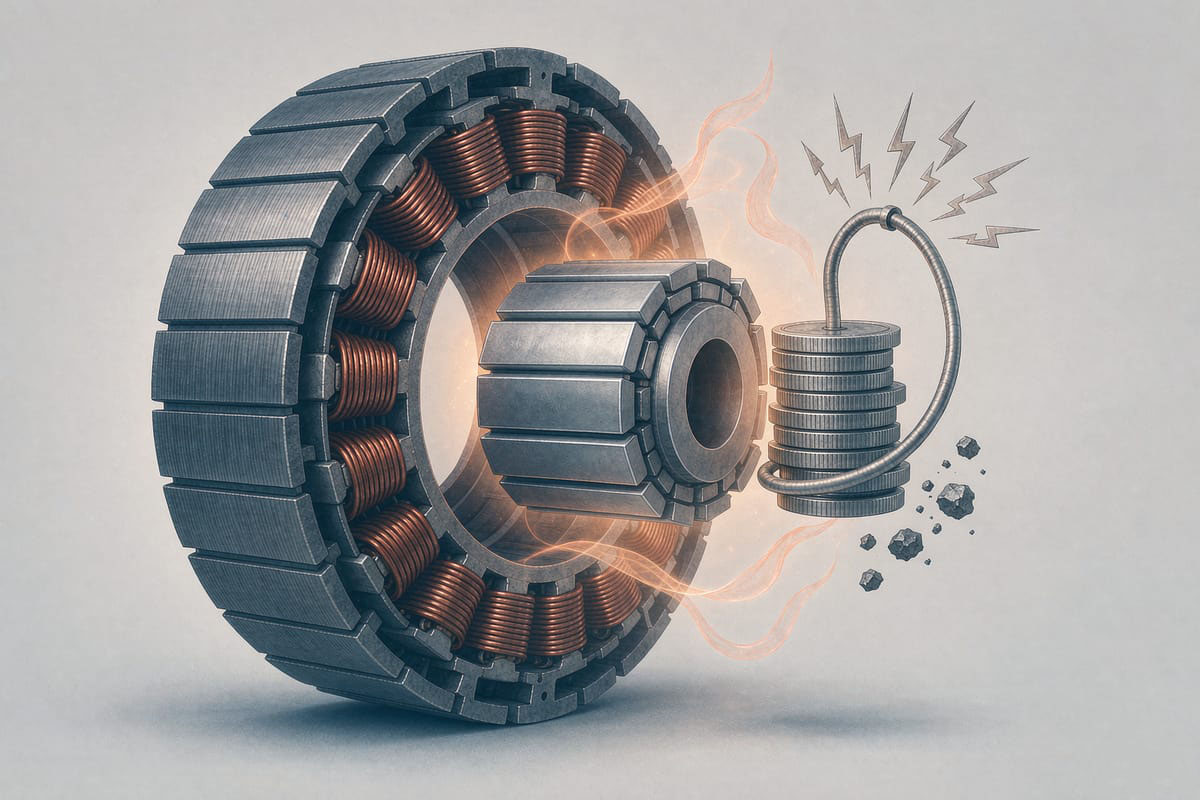
Rare earths. Neodymium traded near ¥997,500/ton in early 2026, up almost 89% year over year. Chinese NdPr metal averaged about ¥600,000/ton in 2025, with a 2026 forecast range of ¥700,000–900,000/ton and possible spikes to ¥1.2 million/ton during tight phases (Trading Economics / industry compilation, 2026).
At the magnet level, SMM data shows NdFeB blank prices rising continuously; other industry sources put NdFeB at ¥550–650/kg in 2026, up roughly 60% from the 2024 low of about ¥400/kg.
Copper. Copper moved from ¥87,000/ton in late 2025 to ¥105,000/ton in early 2026, a gain of over 20%, directly raising stator and rotor winding cost.
Do the pass-through math carefully. Rare earths typically account for 20–30% of motor cost, so a 100% rare-earth increase would theoretically raise motor cost 20–30% — but this ratio varies enormously with power class and magnetic circuit design. Small-frame motors carry a higher magnet share and are hit harder; low-voltage, high-current designs use more copper and are more sensitive to copper prices.
At the market-behavior level it matters even more: leading vendors lock prices through long-term agreements, while smaller vendors are left with spot prices. The real consequence of this round is not uniform cost inflation — it is a divergence in supply-chain bargaining power, in other words, a shakeout.
What Happens When the Three Variables Combine?
Variable | Direction | Implication |
|---|---|---|
Market size | ↑ ¥27.3bn | Growth sits in emerging applications (robotics, logistics, new energy) |
Localization | ↑ past 50% | Price war intensifies in mid/low tiers; differentiation must come from integration and service |
Raw material cost | ↑ rare earths +60% / copper +20% | Component-level price war no longer sustainable; shift to total system cost |
Conclusion: the era of trading component prices for market share is over. The next phase is about "the same performance with less material" and "the same function in less space." The first points to magnetic circuit optimization and reduced heavy-rare-earth designs; the second to drive-control integration and modularization.
The cost logic of integration is structural: it removes the drive enclosure, the power and encoder cables between motor and drive, the cabinet space, and the field wiring labor. With copper at a high level, the savings on cables and connectors grow further.
Three Actions for Procurement and Design Teams
1. Change the quotation basis from "motor unit price" to "cost per axis."
Include the drive, encoder cable, power cable, connectors, cabinet footprint and wiring labor. In a rising copper cycle, the savings from integrated designs in these items are often larger than expected.
2. Look at magnet grade and operating point, not just torque figures.
At equal torque, optimized magnetic circuits and grain boundary diffusion (GBD) technology — which lowers dysprosium and terbium content — significantly reduce exposure to rare-earth prices. Ask suppliers to state the magnet grade, maximum operating temperature and demagnetization knee.
3. Build a dual mechanism: material-linked pricing plus multi-sourcing.
Lock mainstream grades under long-term agreements and qualify a second source for critical frame sizes. The core risk in 2026 is not that prices are high — it is that quotation validity windows are shrinking, moving from quarters to months or shorter.